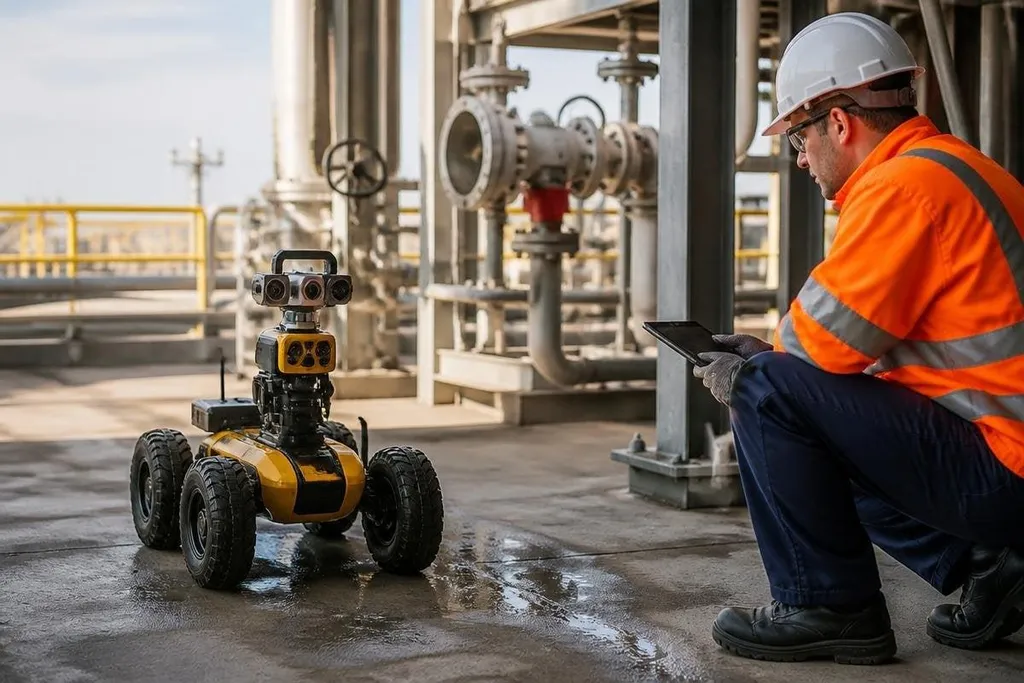
Energy robots can inspect equipment, carry sensors into unsafe areas, and send back data without putting a worker at the site. Their value depends on the task, the environment, and what happens when the robot loses contact or reads a fault incorrectly.
Quick read
- Robots can check hot, high, wet, or contaminated areas while workers stay farther away.
- Sensors are useful only when the robot reaches the right place and sends trustworthy data.
- A backup plan matters because power loss, blocked routes, and weak communications can stop the job.
Where energy robots help
Energy sites contain equipment that needs regular checks. A mobile robot can move along plant floors, carry cameras and heat sensors, and record changes in pipes, valves, cables, or electrical cabinets.
A drone can inspect structures from the air, while an underwater robot can look at parts of a dam, port, or offshore installation below the surface.
That changes the work for the technician. They can review images and sensor readings from a safer location, then visit the site when a repair is needed. Repeated checks fall to the robot; the person decides what the result means and what action to take.
The same pattern can help after an event such as a fire, spill, storm, or equipment failure. A robot may enter first to check access routes and visible damage. The result can help a site team choose protective clothing, tools, and a safe route before anyone walks into the area.
What the robot must get right
A camera alone doesn't make an inspection useful. The robot has to reach the asset, keep its position, collect clear data, and attach that data to the correct place and time. A heat sensor may show a hot connection, but a technician still needs to check whether the reading comes from a fault, a normal load, or a sensor problem.
Power and communications matter just as much. A robot working inside a plant may lose a wireless signal behind metal walls. An outdoor robot may face rain, dust, glare, loose ground, or a blocked path. If it runs out of battery before returning to its charging point, the team needs a way to find and recover it.
This is why the task should be defined before the robot is bought. “Inspect the site” is too broad. “Check these valves every morning, record thermal images, and flag a reading above the site limit” gives the system a job that people can test.
Energy work adds hazards that a task list can’t cover: heat, gas, high voltage, and poor access can change the inspection itself. Robot24.com energy robotics coverage can help you check whether a report names those conditions before the next section turns to the risks teams need to price in.
The risks energy teams need to price in
A robot can reduce worker exposure while adding new failure points. The system may miss a crack, confuse steam with smoke, or send an old image as if it were new. A site team that trusts the screen without checking the method can make a bad call faster.
There are physical risks too. A moving robot can strike equipment or a person. A drone can fall. A battery can fail near heat or flammable material. Radio signals may also carry sensitive site data, so access controls and secure storage belong in the plan from the start.
Maintenance is another cost. Cameras need cleaning, wheels and tracks wear down, batteries lose capacity, and software needs updates. Time in a hazardous area may fall while the need grows for trained staff who can repair the robot, review data, and take control when automation stops.
I’d treat an energy robot as a remote inspection tool first, not as a replacement for site judgment.
A buying checklist
Before a pilot, check these points:
- Name the asset: list the equipment, route, inspection interval, and reading the robot must collect.
- Map the hazards: record heat, water, dust, radiation, gases, slopes, moving equipment, and areas where radio signals fail.
- Set the handoff: decide who reviews the data, who confirms a fault, and who can stop the robot.
- Test failure recovery: remove communications, block a route, lower the battery, and check how the robot reports each problem.
- Count the full cost: include sensors, charging, repairs, software, training, data storage, and site changes.
- Set a pass mark: choose the inspection accuracy, return rate, and worker time needed before expanding the trial.
A pilot should end with a work decision, not a video. If the robot finds faults that workers can verify, returns safely, and costs less than the exposure and time it replaces, the case gets stronger. If it needs constant rescue or produces data nobody can use, the project should stop at the pilot.